Showing posts with label meditation. Show all posts

Wednesday, September 28, 2011

Meditation, Yoga and discussions from Nepal

i got to participate in a 3 day weekend retreat at the Ganden Yiga Chopen meditation centre in Pokhara. It is a sister monastery to the well known Kopan monastery in Kathmandu. Our schedule consisted of wake up, meditation, yoga, breakfast, teachings with the monk, lunch, break, questions for the monk or discussion, yoga, dinner, and meditation, followed by silence. This is a cake walk compared to Vipassana meditation retreats. In my group i was the only one who had completed a Vipassana sitting, and it was looked upon seriously by the monk Yeshe. Yeshe is an american who has been teaching Buddhist theory for over 30 years. He has been in Pokhara teaching for over 4 years. He was a great teacher asking us questions like: "What did you live for when you where 6, 17, and now? and what has changed?" Also, "Who are you?" which he warned would stress some of us out, and i was glad that i have had this question before in yoga because it is a tough one. How does one define themselves? A lot of us define ourselves by our careers, this is usually the last thing i bring up in a conversation. I find it uncreative. Who i am, it is not what i do to pay the bills. Some people think i have been humble in the past, amazed that i am not bragging about one career path i chose, but it truly wasn't who i am.
I am a being, on the path, seeking, learning, absorbing, and giving back as much as possible. I am constantly changing. You don't see it day to day because we are not aware of the changing, but skin cells are dying and regrowing, brain cells are doing the same thing. I can't quantify what i am either and because science changes constantly, so what i know could be totally false, but i am ok with that.
A fellow student on the course who has come to Nepal to learn how to take care of himself better asked me on the last day "Do you consider yourself a buddhist?"
It was a tough question because i have never liked to conform to titles that would define me. The more i learn about Buddhism, the more i would like to say yes to this question. Buddhism is not a religion but very basic principles which i have unknowingly gravitated to without that much thought.
Buddhism believes in the idea of Karma, something that was discussed heavily in the course, mainly because we misuse this term quite a bit. If someone steals my computer it doesn't mean it is a direct result of my karma in this life (even though at the time i thought it did). The fact that i even have a computer in the first place means i have been born with good karma, unlike most of the people in this world. If something really bad happens to me it can be because of something that has happened in a past life. Buddhism believes we are reborn many, many times, and thus believes in not harming any being intentionally. Of course we may kill bugs by accident, or someones pet, or even a human, that your soul is pure during this action is what matters. If you have the intention of harming someone, this is the where the karma comes into play. There was a bit of debate on the buying of meat for our consumption and how easy it is to get it, and technically you are asking for this animal to be slaughtered but because of mass consumption you don't need to ask anymore, the animal is already slaughtered and in the grocery stores waiting for you. In this sense Tibetan Buddhist have rationalized or maybe not that this is ok and you karma is pure in this because you don't have to ask for it to be slaughtered. I question this theory, mainly because it doesn't make sense to me.
This course is a great beginner course. The yoga teaching was very questionable, and not in a good way. I am not to sure where Nepalis get their training or if it is even considered training, but we did multiple poses i have never seen or heard of before, and many things that could result in both short or long term injury, or turn a beginner off of yoga for a long time.
I was warned about doing yoga in Nepal, but i didn't really understand why. Now i do. A lot of it feels made up and still costs around $7usd (which is expensive for Nepal), which is fine if you are stretching safely, but usually you are not. I have only had two different yoga experiences so far so don't get me wrong, their could be some good teachers out there. The course i am attending with Yogi Nomad is an organization that is part of the Yoga Alliance which from my experience seems to follow a very systematic and strong practice, and outputs amazing teachers.
I have read a few articles over the years where the Indian teachers give western teachers a hard time because they are not following the practice as it has been passed down, and from what i have read (mainly from Iyengar), what i have seen is that the western teachers are more in line with origins of yoga then that of the whishy washy east where anyone can be a teacher.
My experience is limited so i can only speak from that, but if you want to come to Asia and do yoga, make sure it is a reputable organization. If you want to come here to practice yoga, just ask around, but sadly you won't like what you hear. I am missing doing a good practice with my community, but in less than a week i start my 6 week intensive training. I am very excited for this new chapter in my learning, and meeting everyone.

last sunset in Pokhara

Monday, April 18, 2011

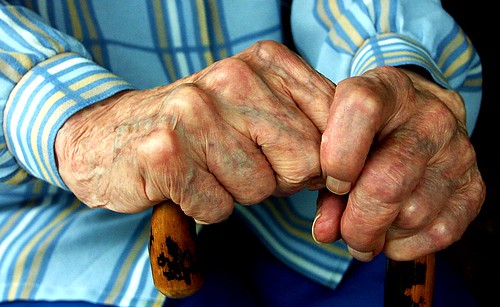
Holding on


Holding on, originally uploaded by algo.

I keep thinking about meditation. I guess because it's such a simple thing, yet sometimes the hardest thing to do. City life leaves little space for the calm, centred time where you can reflect and connect with you inner most spirit. Getting to a yoga class is usually the hardest part of my day.. but now meditation. I have lost count of the amount of people that have come up to me and have said " you look so great" , "you look so calm" , "you sound so calm". Some of these people don't know i have been away meditating or am continuing to meditate. But these comments alone are proof that something is happening. I know i feel it, but the reassurance (dam you ego!) makes it feel even better. Who doesn't want to be a better person? A calmer person? A less stressed person? I think meditation could be the magic something that everyone is searching for and can't seem to find. I was shocked to find out the ages of the people i was working with at the meditation retreat. Everyone looked way younger then i thought. Naturally, less stress equals less aging. This of course is a pretty vain reason to meditate, it's just one of the after effects of all sorts of wonderful of things. I attended a meditation at my local yoga studio yesterday and what i loved most of all, was that people were asking questions, and having tea and conversations after. Already one mediation and we are talking about freeing and enjoying ourselves rather then running out the door to our next appointment. May you all be happy.

Saturday, April 16, 2011

Meditation and Menstrual Cramps


Fotohikari - Ethereal #2 Dao, originally uploaded by Cwithe.

I just returned from my second summit into Vipassanna land. I decided to serve the course and ended up working in the kitchen, make fabulous food full of metta for 50 meditators, two of which were my parents. I have decided to join and sit in a local group on Vancouver to keep up my practice, but i had an added challenge on my last sit.

The joy of being a women and having my uterus contract as it removes it's lining isn't something that i would consider fun. But i have done an amazing job of being present and watching the sensations in my body as they arise and then watching them fade away. Like waves on the ocean during a storm, the storm passes. It actually has been a great tool, and who knew! To remain equanimous and not react and curl up in a ball. To not be vocal and add attachments to verbal negativities was the hardest. How does complaining about it, make it better? It doesn't! I know this isn't something that half of you can relate to, but this month it's become a tool. Peace and Metta to you.

Monday, October 19, 2009

Everyone seeks peace and harmony

Everyone seeks peace and harmony, because this is what we lack in our lives. From time to time we all experience agitation, irritation, dishar mony. And when we suffer from these miseries, we don't keep them to ourselves; we often distribute them to others as well. Unhappiness permeates the atmosphere around someone who is miserable, and those who come in contact with such a person also become affected. Certainly this is not a skillful way to live.

We ought to live at peace with ourselves, and at peace with others. After all, human beings are social beings, having to live in society and deal with each other. But how are we to live peacefully? How are we to remain harmonious within, and maintain peace and harmony around us, so that others can also live peacefully and harmoniously?

In order to be relieved of our misery, we have to know the basic reason for it, the cause of the suffering. If we investigate the problem, it becomes clear that whenever we start generating any negativity or impurity in the mind, we are bound to become unhappy. A negativity in the mind, a mental defilement or impurity, cannot coexist with peace and harmony.

How do we start generating negativity? Again, by investigation, it becomes clear. We become unhappy when we find someone behaving in a way that we don't like, or when we find something happening which we don't like. Unwanted things happen and we create tension within. Wanted things do not happen, some obstacle comes in the way, and again we create tension within; we start tying knots within. And throughout life, unwanted things keep on happening, wanted things may or may not happen, and this process of reaction, of tying knots—Gordian knots—makes the entire mental and physical structure so tense, so full of negativity, that life becomes miserable.

Now, one way to solve this problem is to arrange that nothing unwanted happens in life, that everything keeps on happening exactly as we desire. Either we must develop the power, or somebody else who will come to our aid must have the power, to see that unwanted things do not happen and that everything we want happens. But this is impossible. There is no one in the world whose desires are always fulfilled, in whose life everything happens according to his or her wishes, without anything unwanted happening. Things constantly occur that are contrary to our desires and wishes. So the question arises: how can we stop reacting blindly when confronted with things that we don't like? How can we stop creating tension and remain peaceful and harmonious?

In India, as well as in other countries, wise saintly persons of the past studied this problem—the problem of human suffering—and found a solution: if something unwanted happens and you start to react by generating anger, fear or any negativity, then, as soon as possible, you should divert your attention to something else. For example, get up, take a glass of water, start drinking—your anger won't multiply; on the other hand, it'll begin to subside. Or start counting: one, two, three, four. Or start repeating a word, or a phrase, or some mantra, perhaps the name of a god or saintly person towards whom you have devotion; the mind is diverted, and to some extent you'll be free of the negativity, free of the anger.

This solution was helpful; it worked. It still works. Responding like this, the mind feels free from agitation. However, the solution works only at the conscious level. In fact, by diverting the attention you push the negativity deep into the unconscious, and there you continue to generate and multiply the same defilement. On the surface there is a layer of peace and harmony, but in the depths of the mind there is a sleeping volcano of suppressed negativity which sooner or later may erupt in a violent explosion.

Other explorers of inner truth went still further in their search and, by experiencing the reality of mind and matter within themselves, recognized that diverting the attention is only running away from the problem. Escape is no solution; you have to face the problem. Whenever negativity arises in the mind, just observe it, face it. As soon as you start to observe a mental impurity, it begins to lose its strength and slowly withers away.

A good solution; it avoids both extremes—suppression and expression. Burying the negativity in the unconscious will not eradicate it, and allowing it to manifest as unwholesome physical or vocal actions will only create more problems. But if you just observe, then the defilement passes away and you are free of it.

This sounds wonderful, but is it really practical? It's not easy to face one's own impurities. When anger arises, it so quickly overwhelms us that we don't even notice. Then, overpowered by anger, we perform physical or vocal actions which harm ourselves and others. Later, when the anger has passed, we start crying and repenting, begging pardon from this or that person or from God: “Oh, I made a mistake, please excuse me!” But the next time we are in a similar situation, we again react in the same way. This continual repenting doesn't help at all.

The difficulty is that we are not aware when negativity starts. It begins deep in the unconscious mind, and by the time it reaches the conscious level it has gained so much strength that it overwhelms us, and we cannot observe it.

Suppose that I employ a private secretary, so that whenever anger arises he says to me, “Look, anger is starting!” Since I cannot know when this anger will start, I'll need to hire three private secretaries for three shifts, around the clock! Let's say I can afford it, and anger begins to arise. At once my secretary tells me, “Oh look—anger has started!” The first thing I'll do is rebuke him: “You fool! You think you're paid to teach me?” I'm so overpowered by anger that good advice won't help.

Suppose wisdom does prevail and I don't scold him. Instead, I say, “Thank you very much. Now I must sit down and observe my anger.” Yet, is it possible? As soon as I close my eyes and try to observe anger, the object of the anger immediately comes into my mind—the person or incident which initiated the anger. Then I'm not observing the anger itself; I'm merely observing the external stimulus of that emotion. This will only serve to multiply the anger, and is therefore no solution. It is very difficult to observe any abstract negativity, abstract emotion, divorced from the external object which originally caused it to arise.

However, someone who reached the ultimate truth found a real solution. He discovered that whenever any impurity arises in the mind, physically two things start happening simultaneously. One is that the breath loses its normal rhythm. We start breathing harder whenever negativity comes into the mind. This is easy to observe. At a subtler level, a biochemical reaction starts in the body, resulting in some sensation. Every impurity will generate some sensation or the other within the body.

This presents a practical solution. An ordinary person cannot observe abstract defilements of the mind—abstract fear, anger or passion. But with proper training and practice it is very easy to observe respiration and body sensations, both of which are directly related to mental defilements.

Respiration and sensations will help in two ways. First, they will be like private secretaries. As soon as a negativity arises in the mind, the breath will lose its normality; it will start shouting, “Look, something has gone wrong!” And we cannot scold the breath; we have to accept the warning. Similarly, the sensations will tell us that something has gone wrong. Then, having been warned, we can start observing the respiration, start observing the sensations, and very quickly we find that the negativity passes away.

This mental-physical phenomenon is like a coin with two sides. On one side are the thoughts and emotions arising in the mind, on the other side are the respiration and sensations in the body. Any thoughts or emotions, any mental impurities that arise manifest themselves in the breath and the sensations of that moment. Thus, by observing the respiration or the sensations, we are in fact observing mental impurities. Instead of running away from the problem, we are facing reality as it is. As a result, we discover that these impurities lose their strength; they no longer overpower us as they did in the past. If we persist, they eventually disappear altogether and we begin to live a peaceful and happy life, a life increasingly free of negativities.

In this way the technique of self-observation shows us reality in its two aspects, inner and outer. Previously we only looked outward, missing the inner truth. We always looked outside for the cause of our unhappiness; we always blamed and tried to change the reality outside. Being ignorant of the inner reality, we never understood that the cause of suffering lies within, in our own blind reactions toward pleasant and unpleasant sensations.

Now, with training, we can see the other side of the coin. We can be aware of our breathing and also of what is happening inside. Whatever it is, breath or sensation, we learn just to observe it without losing our mental balance. We stop reacting and multiplying our misery. Instead, we allow the defilements to manifest and pass away.

The more one practices this technique, the more quickly negativities will dissolve. Gradually the mind becomes free of defilements, becomes pure. A pure mind is always full of love—selfless love for all others, full of compassion for the failings and sufferings of others, full of joy at their success and happiness, full of equanimity in the face of any situation.

When one reaches this stage, the entire pattern of one's life changes. It is no longer possible to do anything vocally or physically which will disturb the peace and happiness of others. Instead, a balanced mind not only becomes peaceful, but the surrounding atmosphere also becomes permeated with peace and harmony, and this will start affecting others, helping others too.

By learning to remain balanced in the face of everything experienced inside, one develops detachment towards all that one encounters in external situations as well. However, this detachment is not escapism or indifference to the problems of the world. Those who regularly practice Vipassana become more sensitive to the sufferings of others, and do their utmost to relieve suffering in whatever way they can—not with any agitation, but with a mind full of love, compassion and equanimity. They learn holy indifference—how to be fully committed, fully involved in helping others, while at the same time maintaining balance of mind. In this way they remain peaceful and happy, while working for the peace and happiness of others.

This is what the Buddha taught: an art of living. He never established or taught any religion, any “ism”. He never instructed those who came to him to practice any rites or rituals, any empty formalities. Instead, he taught them just to observe nature as it is, by observing the reality inside. Out of ignorance we keep reacting in ways which harm ourselves and others. But when wisdom arises—the wisdom of observing reality as it is—this habit of reacting falls away. When we cease to react blindly, then we are capable of real action—action proceeding from a balanced mind, a mind which sees and understands the truth. Such action can only be positive, creative, helpful to ourselves and to others.

What is necessary, then, is to “know thyself”—advice which every wise person has given. We must know ourselves, not just intellectually in the realm of ideas and theories, and not just emotionally or devotionally, simply accepting blindly what we have heard or read. Such knowledge is not enough. Rather, we must know reality experientially. We must experience directly the reality of this mental-physical phenomenon. This alone is what will help us be free of our suffering.

This direct experience of our own inner reality, this technique of self-observation, is what is called Vipassana meditation. In the language of India in the time of the Buddha, passana meant seeing in the ordinary way, with one's eyes open; but vipassana is observing things as they actually are, not just as they appear to be. Apparent truth has to be penetrated, until we reach the ultimate truth of the entire psycho-physical structure. When we experience this truth, then we learn to stop reacting blindly, to stop creating negativities—and naturally the old ones are gradually eradicated. We become liberated from misery and experience true happiness.

There are three steps to the training given in a meditation course. First, one must abstain from any action, physical or vocal, which disturbs the peace and harmony of others. One cannot work to liberate oneself from impurities of the mind while at the same time continuing to perform deeds of body and speech which only multiply them. Therefore, a code of morality is the essential first step of the practice. One undertakes not to kill, not to steal, not to commit sexual misconduct, not to tell lies, and not to use intoxicants. By abstaining from such actions, one allows the mind to quiet down sufficiently in order to proceed further.

The next step is to develop some mastery over this wild mind by training it to remain fixed on a single object, the breath. One tries to keep one's attention on the respiration for as long as possible. This is not a breathing exercise; one does not regulate the breath. Instead, one observes natural respiration as it is, as it comes in, as it goes out. In this way one further calms the mind so that it is no longer overpowered by intense negativities. At the same time, one is concentrating the mind, making it sharp and penetrating, capable of the work of insight.

These first two steps, living a moral life, and controlling the mind, are very necessary and beneficial in themselves, but they will lead to suppression of negativities unless one takes the third step: purifying the mind of defilements by developing insight into one's own nature. This is Vipassana: experiencing one's own reality by the systematic and dispassionate observation within oneself of the ever-changing mind-matter phenomenon manifesting itself as sensations. This is the culmination of the teaching of the Buddha: self-purification by self-observation.

It can be practiced by one and all. Everyone faces the problem of suffering. It is a universal malady which requires a universal remedy, not a sectarian one. When one suffers from anger, it's not Buddhist anger, Hindu anger, or Christian anger. Anger is anger. When one becomes agitated as a result of this anger, this agitation is not Christian, or Jewish, or Muslim. The malady is universal. The remedy must also be universal.

Vipassana is such a remedy. No one will object to a code of living which respects the peace and harmony of others. No one will object to developing control over the mind. No one will object to developing insight into one's own nature, by which it is possible to free the mind of negativities. Vipassana is a universal path.

Observing reality as it is by observing the truth inside—this is knowing oneself directly and experientially. As one practices, one keeps freeing oneself from the misery of mental impurities. From the gross, external, apparent truth, one penetrates to the ultimate truth of mind and matter. Then one transcends that, and experiences a truth which is beyond mind and matter, beyond time and space, beyond the conditioned field of relativity: the truth of total liberation from all defilements, all impurities, all suffering. Whatever name one gives this ultimate truth is irrelevant; it is the final goal of everyone.

May you all experience this ultimate truth. May all people be free from misery. May they enjoy real peace, real harmony, real happiness.

MAY ALL BEINGS BE HAPPY

The above text is based upon a talk given by Mr. S.N. Goenka in Berne, Switzerland.

Sunday, September 27, 2009

Stuart Slind - artist


A great video done on my step father Stuart Slind. He did not start painting until he met my mother 19 years ago, and she pushed and supported him while he explored, and focused on painting. As he says in the video, he worked hard at it, and that is something i think anyone has to do in order to be successful at anything. Passion and love make up for the rest of it. I am very proud of Stuart and his commercial success, but it doesn't go to his head. He practices yoga and can hold a head stand longer then most people, and has shifted from Zen Buddhism to Vippassanna meditation over the years. Making there home on Bowen Island, sets for an idillic space to create and is often transferred into his works. Check out his website here, or his work at the Bau-xi gallery, his next show is January 2010.